
Skin condition guide
Sensitive Skin: Understanding Your Skin
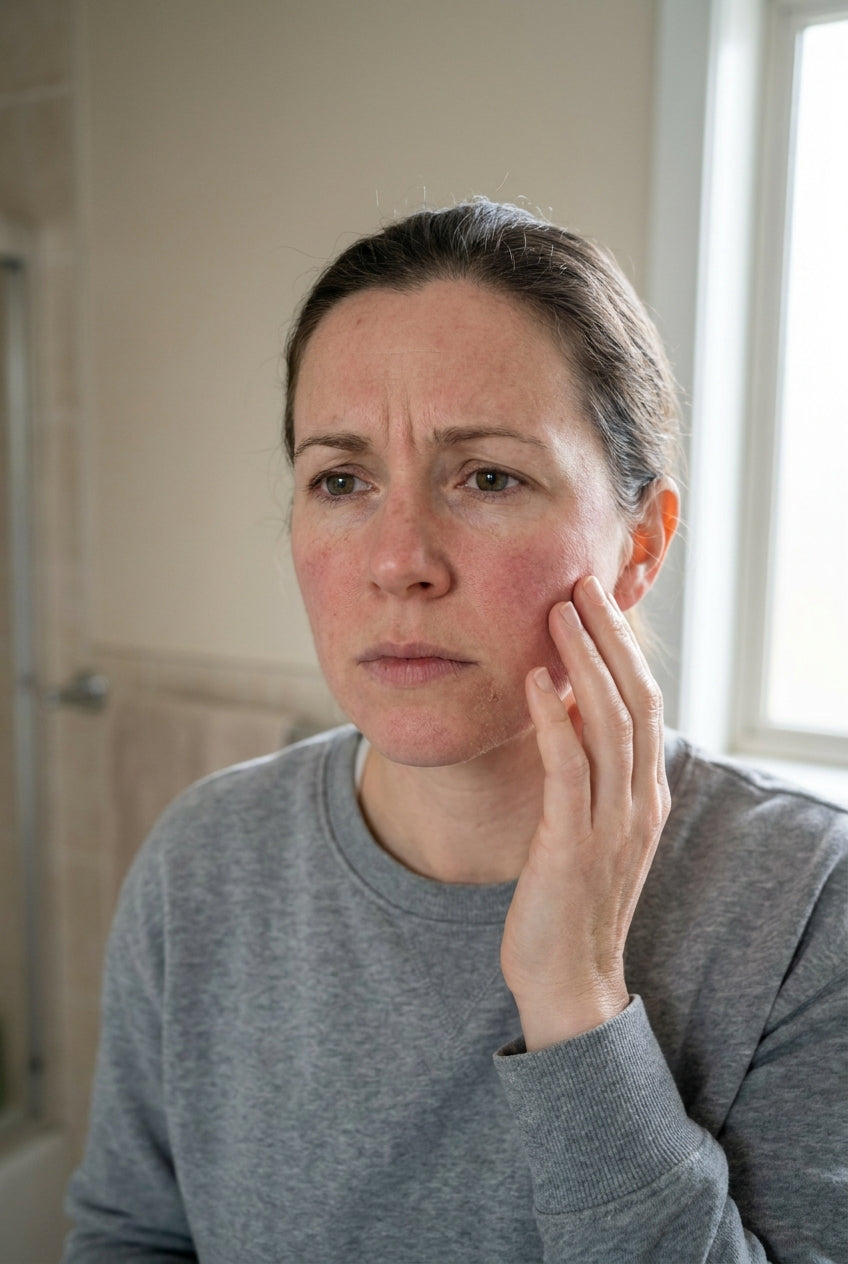
Skin that reddens, stings, or feels tight easily benefits from fewer ingredients and a gentler routine.
Sensitive Skin at a glance
Sensitive Skin at a Glance
Here are the key things to know about Sensitive Skin, from common triggers to helpful ingredients. Tap a card to jump to that section.
Causes & Triggers
Sensitive Skin can be triggered by environmental factors, irritants, allergens and stress.
Common Symptoms
Dry, red, itchy and inflamed skin are the most common signs.
Helpful Ingredients
Certain ingredients can help soothe, hydrate and support your skin barrier.
Ingredients to Avoid
Some ingredients can irritate sensitive skin and may trigger flare-ups.
Stay in touch
Get the sensitive-skin routine guide
Sign up and we'll send a free add-on with your first order.
The basics
Understanding Sensitive Skin
The triggers
What to know about Sensitive Skin
Common triggers
- Weakened skin barrier
- Over-exfoliation
- Harsh ingredients
What it can look like
- Easily irritated
- Redness
- Dryness
- Stinging
- Tight skin feeling
What helps day to day
- Simplify your routine to a gentle cleanser, moisturizer, and sunscreen
- Choose fragrance-free products; fragrance is one of the top irritants for reactive skin
- Patch-test new products on the inside of your arm for 24 to 48 hours before full use
- Use lukewarm water; hot water can strip the skin barrier further
- Introduce one new product at a time so you can tell what is or isn't working
- Talk with a dermatologist if redness, stinging, or breakouts persist despite a gentle routine
Key ingredients
Ingredients to Look For
These ingredients can help hydrate, soothe and support your skin barrier. They are often well tolerated by sensitive skin, but every person's skin is unique.

Glycerin
A gentle humectant that hydrates without the irritation risk of harsher moisturizing ingredients.

Shea butter
A rich, gentle emollient that softens and protects a fragile skin barrier.

Sodium Hyaluronate
A lightweight hydrator that plumps and soothes without common irritants.
Ingredients to Avoid
These ingredients may be too harsh for sensitive skin and can trigger irritation or flare-ups.
- Fragrance
- SLS
- Alcohol
- Dyes
This is not an exhaustive list. Always check product labels and work with your healthcare provider to find what works best for you.
Product recommendations
Build a gentle Sensitive Skin-friendly routine
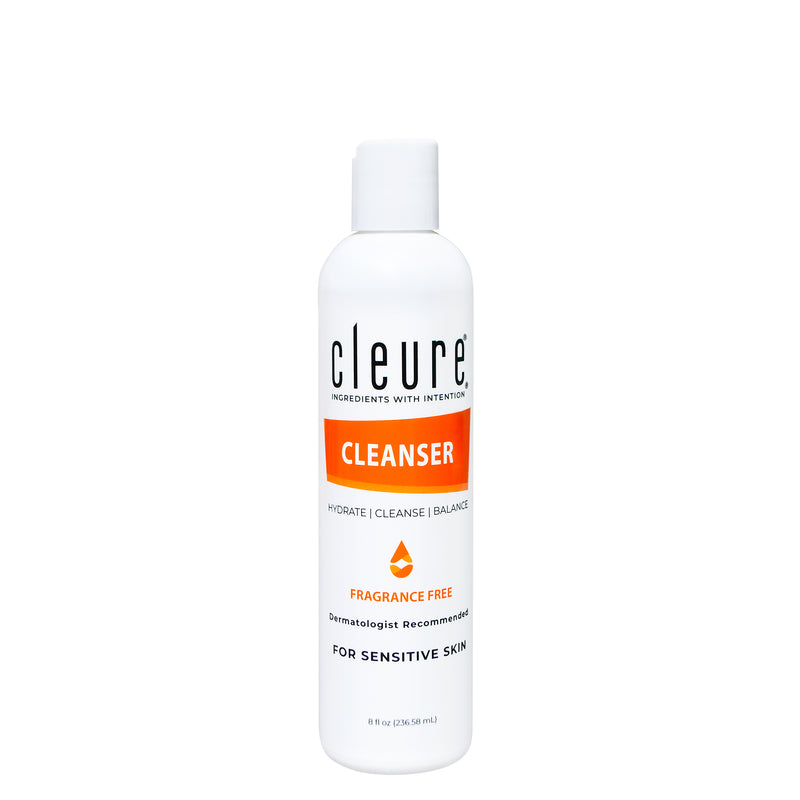
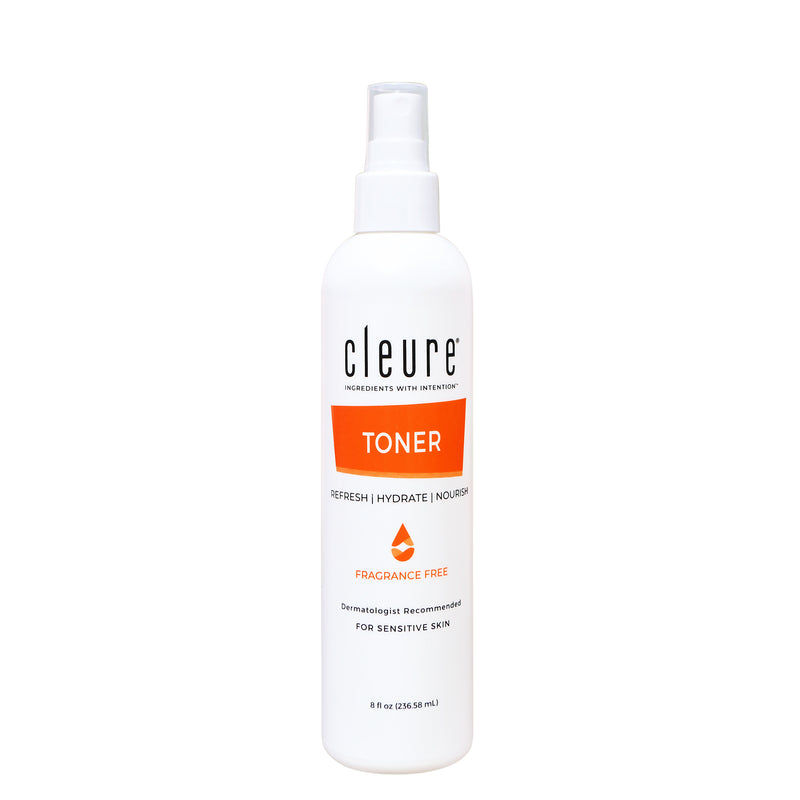
A simple, consistent routine can help keep your skin comfortable and supported. These Cleure products are formulated without fragrance, dyes or harsh irritants.
Frequently asked questions
Sensitive Skin Questions, Answered
"Unscented" products can still contain fragrance used to cover up other smells. "Fragrance-free" means no fragrance was added. Cleure products are fragrance-free.
A weakened skin barrier, whether from genetics, over-exfoliation, or years of harsh products, leaves skin less protected against everyday irritants.
Start with the products that touch the most skin: cleanser and moisturizer. Then work outward to hair care and body care.
Occasional stinging, redness, or tightness from certain products often points to sensitivity, while persistent rashes, sores, or scaling are worth having a dermatologist evaluate.
Apply a small amount to the inside of your arm once or twice a day for a few days. If there's no reaction, try it on a small area of the face.
Fragrance, SLS, alcohol, and dyes are common triggers for stinging and redness in sensitive skin.
Stop using the product and rinse. If it's severe or doesn't settle, contact your doctor. Our Satisfied or Refunded policy covers returns within 30 days.
Barrier repair generally takes weeks, not days. Consistency with a gentle, minimal-ingredient routine matters more than switching products often.
Sources
- American Academy of Dermatology: How to test skin care products
- American Contact Dermatitis Society: CAMP (Contact Allergen Management Program)
Cleure products are not intended to diagnose, treat, cure, or prevent any condition. Many customers with sensitive skin tell us a simpler, fragrance-free routine is easier to live with. If you have questions about Sensitive Skin, talk with your dermatologist or physician.