
What Is Dermatitis? Types, Causes, and How to Care for Sensitive Skin Gently
Dermatitis is inflamed, irritated skin, and if a new product has ever left you with redness, itching, or a rash instead of a healthy glow, you already know how frustrating it can be. You're not imagining it, and you're not alone: dermatitis is one of the most common skin complaints there is.
Not every rash or breakout is dermatitis. Acne, rosacea, infections, and other skin conditions can look similar. A dermatologist is the right person to confirm what's actually going on with your skin.
What is dermatitis?
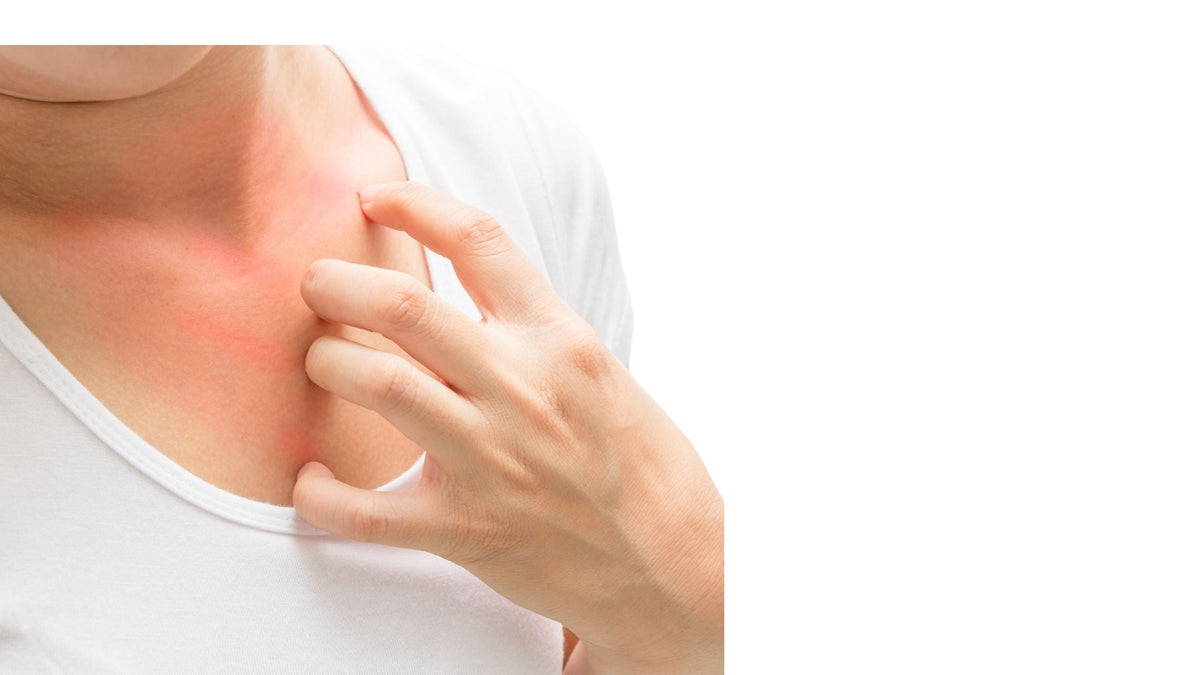
Dermatitis is a general term for a group of conditions that cause inflammation of the skin. It typically shows up as itching, redness or discoloration, dryness, swelling, scaling, or a burning feeling.
Some forms come from direct contact with an irritant or allergen. Others are tied to genetics, the immune system, the skin barrier, oil production, or environmental factors. Dermatitis is not contagious, so you can't catch it from someone else or pass it on.[1]
What are the different types of dermatitis?
"Dermatitis" covers several distinct conditions that can look alike but have different causes and treatments.
Contact dermatitis
Contact dermatitis develops when skin reacts to something it has touched. There are two forms: irritant contact dermatitis, caused by damage to the skin barrier, and allergic contact dermatitis, a delayed immune reaction to a specific allergen.[1,4]
Atopic dermatitis (eczema)
Atopic dermatitis is a chronic, inflammatory condition that causes dry, itchy skin. It's the most common chronic inflammatory skin disease, affecting an estimated 10 to 30 percent of children and 2 to 10 percent of adults in the United States, and it tends to run in families with a history of eczema, asthma, or hay fever.[5]
Seborrheic dermatitis
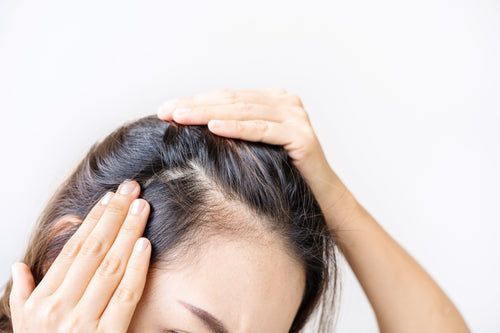
Seborrheic dermatitis is a common condition that causes a scaly rash on oily areas of the body, most often the scalp and face.[6] It can also affect the eyebrows, sides of the nose, ears, and chest, with flaking, dandruff, or greasy-looking scales.
Nummular dermatitis (nummular eczema)
Nummular eczema causes itchy, round or oval spots that can grow together into larger patches, often on the arms, back, buttocks, or lower legs.[7] It's more common in people who already have atopic dermatitis, stasis dermatitis, or contact dermatitis, and it tends to come back in the same spot once triggered.
Perioral dermatitis
Perioral dermatitis causes small bumps and a rash around the mouth, and sometimes around the nose or eyes.[8] The skin can feel dry, tender, itchy, or like it's burning. Notably, topical steroid use on the face can trigger or worsen it, so anyone using a prescription steroid on their face should talk to their prescriber before stopping it on their own.
What causes irritant contact dermatitis?
Irritant contact dermatitis happens when a substance or repeated exposure damages the skin's protective barrier. You don't need an allergy for it to happen. Enough exposure to the right irritant can affect almost anyone.[2]
Common triggers include:
- Frequent handwashing or prolonged contact with water
- Soaps, detergents, and household cleaners
- Solvents and workplace chemicals
- Harsh exfoliants and abrasive scrubs
- Friction, heat, cold, or dry air
- Saliva, urine, and other body fluids
- Hair dyes and chemical hair treatments
- Certain skin, hair, and oral care products
How your skin responds depends on the strength of the irritant, how long and how often you're exposed, and the condition of your skin beforehand. People who already have a weakened skin barrier, such as those with atopic dermatitis, tend to be more susceptible.[9]
What it looks and feels like: redness or discoloration, dryness, scaling, swelling, itching, tenderness, and in stronger reactions, blistering. Symptoms usually stay where the skin was exposed, at the point of contact.
What causes allergic contact dermatitis?
Allergic contact dermatitis happens when the immune system becomes sensitized to something touching the skin. Unlike a typical allergy, the reaction is delayed, often appearing 24 to 72 hours after exposure, which makes the cause harder to pin down.[10] Once you're sensitized to a substance, even a small future exposure can trigger a reaction again.
Common allergens include:
- Fragrance and fragrance ingredients
- Nickel, cobalt, and other metals
- Poison ivy, poison oak, and poison sumac
- Hair dye ingredients
- Rubber chemicals and adhesives
- Preservatives
- Essential oils and botanical extracts
- Certain topical medications
- Ingredients in cosmetics and personal care products
Worth knowing: "natural," "organic," and "clean" don't automatically mean gentler. Essential oils, botanical extracts, and natural fragrance compounds are common causes of allergic contact dermatitis.[10]
What it looks like: intense itching, a red, brown, purple, or gray rash depending on skin tone, swelling, dryness, scaling, small bumps, or weeping. The rash usually starts where contact happened but can spread, since allergens are easily transferred by the hands to the face, eyelids, or neck.[3]
Irritant vs. allergic contact dermatitis: what's the difference?
| Irritant contact dermatitis | Allergic contact dermatitis |
|---|---|
| Caused by direct damage to the skin barrier | Caused by a delayed immune reaction |
| Can affect almost anyone with enough exposure | Only happens in someone already sensitized |
| May appear quickly or build up gradually | Often appears 24 to 72 hours after contact |
| Burning or stinging is often prominent | Itching is often prominent |
| Usually stays in the exposed area | Can spread beyond the original contact site |
It's possible to have both at once, and because the two can look so similar, appearance alone isn't always enough to tell them apart. A dermatologist can help sort out which is which, often through patch testing.[4]
Can skin care products cause dermatitis?
Yes. Skin care, hair care, oral care, makeup, and household products can all trigger irritation or an allergic reaction in some people. This doesn't necessarily mean a product is unsafe. Skin sensitivity varies a great deal from person to person.
A few things that help when choosing products for sensitive or easily irritated skin:
- Look for "fragrance-free," not just "unscented" (unscented products can still contain masking fragrance)
- Avoid ingredients you already know trigger you
- Favor a shorter, easier-to-review ingredient list
- Introduce one new product at a time so you can tell what caused a reaction
- Stop using anything that causes ongoing burning, itching, or a rash
No personal care product is guaranteed allergy-free for every single person, and "hypoallergenic" isn't a regulated or standardized term. If reactions keep happening, ask your dermatologist about professional patch testing to identify the specific cause.
How Cleure can help sensitive, easily irritated skin
Cleure was founded by a dentist formulating for people whose skin, scalp, and mouths react to things other products don't think twice about. Every formula is built around leaving things out: no added fragrance, no dyes, no SLS, and no parabens.
Depending on your particular sensitivities, a few swaps can simplify your routine:
- Cleure Face/Body Wash and Cleure Lotion Cleanser clean without introducing fragrance to your routine.
- Cleure Day Cream, Night Cream, and Body Lotion are formulated to help support a dry or compromised moisture barrier without added fragrance.
- Cleure Shampoo and Conditioner give you a fragrance-free hair care options for a sensitive scalp, which matters since hair care rinse-off is a common but often overlooked source of contact dermatitis on the face and neck.
- Cleure Toothpaste (Unflavored) and Cleure Lip Balm (Unflavored) are worth a look if you're dealing with perioral dermatitis, since flavoring agents and mint are known irritants right around the mouth.
None of these are a treatment or cure for dermatitis, and they won't work identically for everyone. If you're actively flaring, patch test any new product on a small area first, and check the full ingredient list against your own known triggers before switching.
Browse Cleure's fragrance-free skin care or see the full ingredient list for any product before you buy.
How should you introduce a new product if your skin reacts easily?
Apply a small amount to a limited area, such as the inside of your forearm, and watch it for a few days for redness, itching, burning, or swelling before using it more broadly. Skip testing on skin that's already broken or actively inflamed.
A home test like this isn't the same as medical patch testing, and it can't diagnose allergic contact dermatitis on its own. A dermatologist performs and interprets true patch testing to identify specific allergens. If you've had a severe reaction before, check with your dermatologist before trying anything new.
How is dermatitis managed?
Management depends on the type and severity, and what helps contact dermatitis isn't necessarily right for seborrheic or perioral dermatitis, so an accurate diagnosis matters.
- Identify and avoid your triggers. Keep track of what you used or touched before a flare. A dermatologist may recommend patch testing if allergic contact dermatitis is suspected.
- Simplify your routine during a flare. Don't introduce several new products at once. Stick to a mild, fragrance-free cleanser and a moisturizer your skin already tolerates, such as Cleure.
- Protect the skin barrier. Use lukewarm, not hot, water for showers and baths, pat skin dry gently, and moisturize right after.
- Reduce irritant exposure. Wear gloves for cleaning or chemical exposure, but let hands dry out between uses since trapped sweat can irritate too.
- Use a cool, clean compress to ease itching and discomfort. Avoid applying ice directly to skin.
- Avoid scratching. It worsens inflammation and raises infection risk. Keep nails short.
- Follow medical treatment as directed if a healthcare professional prescribes one, whether that's a topical steroid, a calcineurin inhibitor, an antihistamine, or something else. Don't apply steroid cream to an unexplained facial rash without medical guidance, since it can worsen perioral dermatitis specifically.
When should you see a dermatologist?
See a healthcare professional if a rash is severe, spreading, or painful; affects your eyes, face, mouth, or genitals; keeps coming back; interferes with sleep or daily life; doesn't improve after you stop using a suspected product; or if you simply can't identify the cause.
Seek prompt care for signs of infection: increasing pain, warmth, swelling, pus, or fever. Call emergency services right away for difficulty breathing, swelling of the lips or tongue, or any sign of a serious allergic reaction.
Frequently asked questions
Is dermatitis the same as eczema?
Eczema is a broad term for a group of inflammatory skin conditions. Atopic dermatitis is the most common form, and contact and nummular dermatitis are also considered types of eczema.
Is dermatitis contagious?
No, dermatitis can't be passed from person to person.[1] Some infections can look similar, though, so a rash that's uncertain or getting worse is worth having examined.
Can you suddenly become allergic to a product you've used for years?
Yes. Allergic contact dermatitis develops after the immune system becomes sensitized, so you can start reacting to an ingredient you've used without issue for a long time. A formula change, or the same allergen showing up in a different product, can also explain a new reaction.
Does "natural" mean it's better for sensitive, dermatitis-prone skin?
Not necessarily. Essential oils, botanical extracts, and natural fragrance compounds are among the more common causes of allergic contact dermatitis.[10] The ingredient list matters more than the marketing word.
What's a good skin care routine if you're prone to dermatitis?
A mild, fragrance-free cleanser, lukewarm water, and a moisturizer your skin already tolerates is a reasonable starting point. Avoid your known triggers and add only one new product at a time so you can tell what's working.
The bottom line
Dermatitis covers several different conditions, but the common thread is inflamed, uncomfortable skin, often set off by something as ordinary as a soap, a fragrance, or a metal. Irritant contact dermatitis comes from direct damage to the skin barrier; allergic contact dermatitis comes from a delayed immune reaction to a specific trigger. Figuring out which one you're dealing with, and what's actually causing it, is what makes avoiding it possible.
Choosing fragrance-free, simply formulated products is one practical way to cut down on unnecessary exposure while you figure out your own triggers. Because everyone's sensitivities are different, a persistent or severe reaction is always worth a dermatologist's opinion.
This article is for educational purposes and isn't a substitute for medical diagnosis or treatment.
References
- American Academy of Dermatology. Eczema types: Contact dermatitis overview.
- American Academy of Dermatology. Eczema types: Contact dermatitis causes.
- American Academy of Dermatology. Eczema types: Contact dermatitis signs and symptoms.
- MedlinePlus (National Library of Medicine). Contact dermatitis.
- NIAID, National Institutes of Health. Eczema (Atopic Dermatitis).
- American Academy of Dermatology. Seborrheic dermatitis: Overview.
- American Academy of Dermatology. Eczema types: Nummular eczema overview.
- StatPearls, NCBI Bookshelf (NIH). Perioral Dermatitis.
- MedlinePlus (National Library of Medicine). Contact dermatitis: Irritant risk factors.
- StatPearls, NCBI Bookshelf (NIH). Allergic Contact Dermatitis.
Recommended ProductsPersonal Care Products for Contact Dermatitis
Cleure products avoid most common allergens and irritants making them a pretty safe bet for all of your skin, hair, and oral care needs.








2 comments
I have been using your original toothpaste. I am allergic to balsam of Peru. I’m flying out of country and your 4 ounce tube exceeds the 3.4 ounce limit allowed. I’m wondering if you have any small travel size tubes available.
It could be something people would need. Thanking you in advance for your response.
E h ellett
I was diagnosed with Contact Dermatitis in July 2022. I have had a patch test done. I was told I was allergic to Cobalt. I am currently using No nothing shampoo and conditioner but I noticed that my neck still burns after use. It doesn’t happen always. I don’t know what could be causing the irritation.
Sylvia
Leave a comment
This site is protected by hCaptcha and the hCaptcha Privacy Policy and Terms of Service apply.